Sliding Patient Transfer Trolley for Reduced-Mobility Hospital Patients
Product Overview
Sliding Patient Transfer Trolley for Patients Requiring Assisted Movement
Patients with limited mobility may require considerable assistance when moving between different hospital areas. Repeatedly repositioning or changing the patient's support surface can also add extra steps to the transfer process.
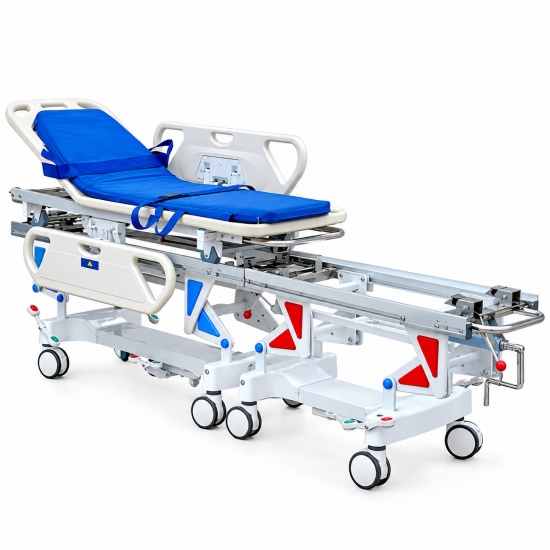
The JH-OCT105 uses a different approach. It combines two height-adjustable trolley units with a sliding patient platform, allowing the platform supporting the patient to move from one trolley to the other after the two units have been correctly aligned.
Once the platform reaches the receiving trolley, it automatically locks into position and an additional safety mechanism provides secondary securing.
Keep the Patient on the Transfer Platform during Docking
A Transfer System Built around the Patient Platform
The central feature of the JH-OCT105 is its movable patient platform.
Instead of treating the two trolley units as two completely separate patient surfaces, the system allows the same platform to travel between the sending trolley and the receiving trolley.
For patients who depend heavily on caregiver assistance, this provides a practical transfer method in which the patient remains supported on the transferable platform during the docking procedure.
Height Alignment before the Transfer Begins
Two Height-Adjustable Trolley Units
Before the patient platform is moved, the two trolley units can be adjusted until they reach the same level.
The complete system has an overall specification of L3650 × W640 × H640–970 mm.
Height alignment is an important part of the transfer procedure because the sliding platform requires the two trolley units to establish a suitable transfer path before movement begins.
Prepare the Equipment before Moving the Platform
For patients who cannot independently reposition themselves, preparation of the equipment becomes an important part of the caregiver workflow.
The trolley units are first positioned, height-aligned and secured before the sliding transfer process is carried out.
Sliding Platform for Assisted Patient Transfer
Four Quiet-Running Rollers beneath the Patient Platform
The molded ABS patient platform is fitted with four quiet-running rollers underneath.
These rollers allow the platform to move along the docking track between the two trolley units.
Instead of moving the complete trolley through the docking point, caregivers transfer the patient platform itself onto the receiving trolley.
A380.2 Aluminum Alloy Track Guides Platform Movement
The docking track is manufactured from A380.2 high-strength die-cast aluminum alloy.
It provides the guided path required for movement of the sliding patient platform between the two trolley units.
The combination of the transfer track and the four platform rollers forms the core mechanical structure of the docking transfer process.
Automatic Locking after the Patient Platform Arrives
Secure the Platform on the Receiving Trolley
When the sliding platform reaches the receiving trolley, the system automatically locks it into position.
This means platform movement and platform securing are integrated into the transfer workflow rather than relying only on manual positioning after the platform arrives.
Secondary Safety Mechanism
An additional safety mechanism is incorporated into the system to provide another securing element after the platform has reached the trolley.
Both the locking and safety components are manufactured from 304 stainless steel.
Lift-Up ABS Side Rails for Caregiver Access
The patient platform is equipped with molded ABS engineering-plastic lift-up side rails.
When the patient is being transported, the raised rails provide lateral protection around the patient platform.
When caregivers require closer access to the patient, the lift-up structure allows the rail position to be changed according to the patient-handling procedure.
Gas-Spring Assisted Backrest
Upper-Body Position Adjustment without an Electric Backrest Motor
The backrest uses a gas spring as its supporting force source.
This provides a mechanical assistance system for adjusting the patient's upper-body position during the care and transport process.
The supplied technical documentation does not specify a numerical backrest adjustment angle, so no unsupported angle range is assigned to this model.
Central Braking before Assisted Transfer
Central Braking on Both Trolley Units
Because the JH-OCT105 relies on two separate mobile bases, securing the trolley units before platform movement is an important part of the transfer workflow.
Both trolley units are equipped with central braking systems.
After the units have been correctly positioned and aligned, the braking systems can be used to secure the mobile bases before the patient platform is transferred.
Eight Ø150 mm Casters for Hospital Mobility
The complete system is equipped with eight Ø150 mm central-control casters.
The caster construction uses PA6 for the main frame and wheel core together with a TPU wear-resistant tread.
Precision ball bearings are incorporated into the wheel structure, while the caster design is specified for reduced noise and vibration during transport.
Ø100 mm Directional Wheel for Controlled Travel
One Ø100 mm directional wheel is included in the product configuration.
The directional wheel provides additional assistance when caregivers need greater directional control during trolley movement.
Patient Transfer Workflow for Reduced-Mobility Patients
1. Transport the Patient to the Transfer Point
The patient remains supported on the movable patient platform while the first trolley is brought to the designated transfer location.
2. Position the Receiving Trolley
The second trolley is positioned on the opposite side of the docking point.
3. Align the Two Trolley Units
Adjust the two units to the same level so that the docking track and sliding platform can form the required transfer path.
4. Secure the Mobile Bases
Use the central braking systems to secure the trolley units before platform movement begins.
5. Move the Patient Platform
The patient platform travels along the docking track on its four quiet-running rollers.
6. Allow the Platform to Lock into Position
Once the platform reaches the receiving trolley, the automatic locking mechanism secures it.
7. Confirm the Additional Safety Mechanism
The secondary safety device provides an additional securing step before the transfer procedure is completed.
8. Continue Patient Transportation
After the platform is correctly secured, the receiving trolley can continue with the next stage of patient transportation.
Designed for Patients Who Need Greater Caregiver Assistance
Some patients can independently reposition themselves during a transfer, while others depend heavily on nursing staff for movement and positioning.
The JH-OCT105 is particularly relevant to professional hospital environments where the patient needs to remain supported during a controlled transfer between two trolley units.
The sliding-platform concept can reduce the need to move the patient between two separate trolley surfaces at the docking point because the support platform itself is transferred.
Carbon Steel Trolley Structure
Powder-Coated Main Frame
The main trolley bodies are manufactured from welded carbon structural steel.
The steel surfaces undergo rust-removal treatment followed by electrostatic resin powder coating.
This carbon steel structure forms the mobile base of the system, while the docking track itself is manufactured from A380.2 high-strength aluminum alloy.
Molded ABS Patient Platform and Side Rails
The patient platform is manufactured from molded ABS engineering plastic.
The same technical documentation specifies molded ABS engineering plastic for the lift-up side rails.
The patient platform incorporates four quiet-running rollers underneath to support movement along the transfer track.
Adjustable 304 Stainless Steel IV Pole
The standard configuration includes a two-section adjustable IV pole manufactured from 304 stainless steel.
The IV pole has a specified diameter of Ø19 mm and provides an integrated location for compatible infusion support during patient transportation.
Supporting Controlled Transfers between Hospital Areas
The dual-trolley design allows two separate mobile bases to operate on either side of a defined transfer point while the patient platform moves between them.
This configuration can support hospital workflows in which transport routes or controlled areas are separated, without requiring the complete trolley base to travel through every section of the route.
For elderly or reduced-mobility patients, the key benefit of the design is not simply that the trolley moves. It is that the patient can remain on the transferable platform while the platform changes from one mobile base to the other.
Key Technical Specifications
Model: JH-OCT105.
Product Type: Sliding Patient Transfer Trolley.
Primary Application: Hospital and operating room patient transfer.
Overall Size: L3650 × W640 × H640–970 mm.
Height Range: 640–970 mm.
Transfer Structure: Dual-trolley docking system.
Patient Transfer Method: Sliding patient platform between two trolley units.
Docking Track: A380.2 high-strength die-cast aluminum alloy.
Main Trolley Frame: Welded carbon structural steel.
Surface Finish: Electrostatic resin powder coating.
Patient Platform: Molded ABS engineering plastic.
Platform Rollers: 4 quiet-running rollers.
Platform Locking: Automatic locking mechanism.
Secondary Securing: Safety locking mechanism.
Locking and Safety Components: 304 stainless steel.
Backrest: Gas-spring assisted adjustment.
Side Rails: Molded ABS lift-up side rails.
Main Casters: 8 × Ø150 mm central-control casters.
Caster Structure: PA6 main frame and wheel core with TPU tread.
Braking System: Central braking on both trolley units.
Directional Wheel: 1 × Ø100 mm.
IV Pole: Ø19 mm two-section adjustable 304 stainless steel IV pole.
Net Weight: 135 kg.
Gross Weight: 180 kg.
Main Trolley Packing Size: 2080 × 740 × 800 mm.
Secondary Trolley Packing Size: 1920 × 680 × 615 mm.
Patient Transfer Equipment for Elderly and Reduced-Mobility Hospital Patients
The JH-OCT105 provides a specialized transfer solution for hospitals managing patients who require caregiver assistance during movement between clinical areas.
Its two trolley units can be height-aligned at the transfer point, after which the patient platform slides along the dedicated A380.2 track and automatically locks onto the receiving trolley. This allows the patient to remain supported on the transferable platform throughout the docking process.
Explore our Patient Transfer Equipment range for additional patient handling and hospital transport solutions.
For elderly patients requiring longer-term bedside support, explore our Nursing Bed range.
For technical specifications, project quantities, available configurations or OEM/ODM requirements, contact us with your requirements.
Frequently Asked Questions
Yes, we support comprehensive OEM and ODM customization services. We can adjust bed size, load-bearing capacity, number of adjustment functions, bed surface material, guardrail style and overall color according to your demands. For medical institutions, we can also add matching auxiliary accessories
We support door-to-door global shipping covering Europe, North America, Southeast Asia, Middle East and other regions. All medical beds are shipped with modular packaging to reduce transportation damage. We provide free detailed English paper installation manuals and step-by-step installation video
Our full range of medical beds supports multi-scenario use. Electric medical beds and manual hospital beds are specially designed for general wards, intensive care units and emergency rooms of public and private hospitals. Nursing beds with side rails and anti-fall functions are perfect for nursing
Related Products You May Like
Sliding Patient Transfer Troll...
Sliding Patient Transfer Trolley for Patients Requiring Assisted MovementPatient
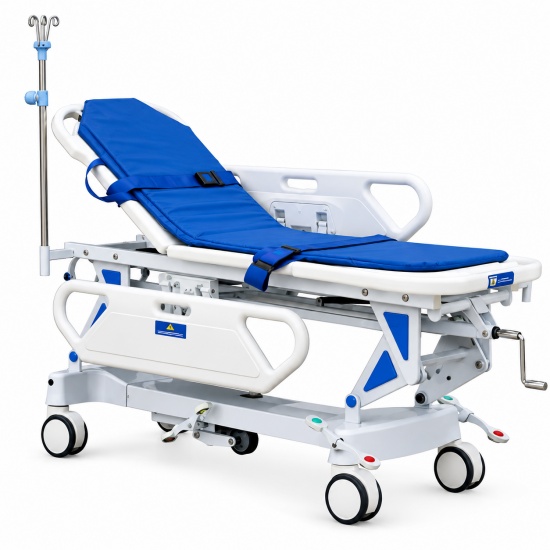
Manual Patient Transport Troll...
Height Adjustable Patient Transfer Stretcher for Reduced-Mobility CarePatients w
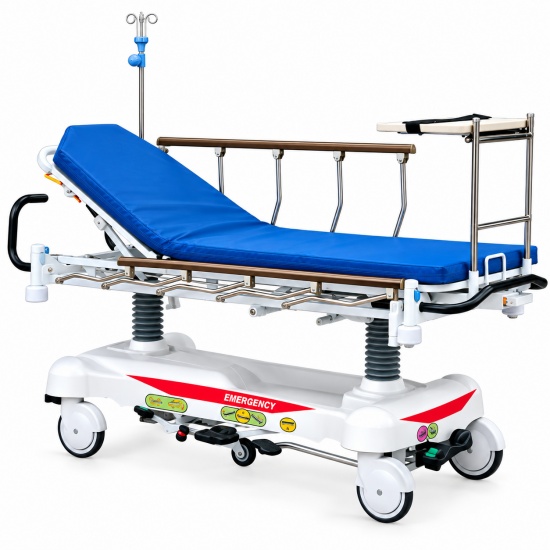
Hydraulic Patient Transfer Str...
Hydraulic Patient Transfer Stretcher for Reduced-Mobility CarePatients with sign