Manual Patient Transport Trolley with Adjustable Height and Central Brake
Product Overview
Height Adjustable Patient Transfer Stretcher for Reduced-Mobility Care
Patients with limited mobility may need considerable assistance when moving from a care bed to another treatment or care area. For caregivers, a suitable transport stretcher should provide more than a mobile patient platform. It should allow convenient bedside access, adjustable working height, secure stationary positioning and controlled movement throughout the transfer process.
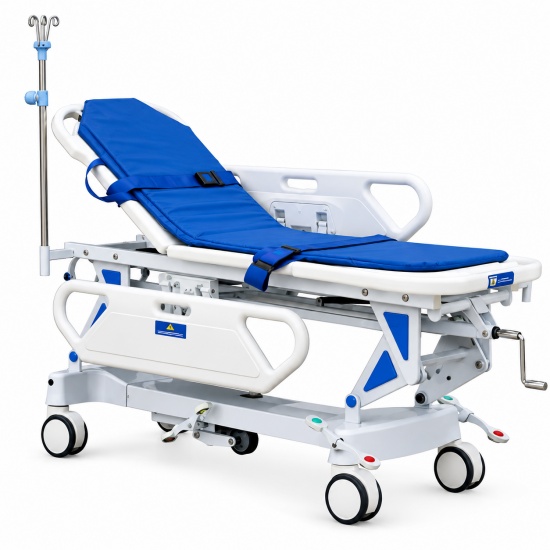
The JH-OCT103 patient transfer stretcher is designed for professional elderly care, rehabilitation and reduced-mobility patient transport. Its manual crank system adjusts the overall height from 560 mm to 860 mm, while a gas-spring assisted backrest allows the patient's upper body to be positioned from 0° to approximately 75° ±5°.
A 300 kg maximum load capacity, lift-up ABS side rails, central braking system, retractable fifth wheel, oxygen cylinder holder and two patient safety straps further support assisted patient transportation in professional care environments.
Match the Stretcher Height to the Bedside Transfer Situation
560–860 mm Manual Height Adjustment
The JH-OCT103 uses a mechanical crank system to raise or lower the patient platform between approximately 560 mm and 860 mm.
This adjustment range gives caregivers greater flexibility when positioning the stretcher beside nursing beds and other patient-support surfaces.
Adjust the Equipment before Moving the Patient
Patients with reduced mobility may not be able to reposition themselves independently during a transfer. Preparing the stretcher position and working height before patient handling begins is therefore an important part of the caregiver workflow.
The foldable stainless steel crank allows the platform height to be adjusted manually and then folded away after the required position has been selected.
Open Side Access for Assisted Patient Transfer
ABS Lift-Up Side Rails
Two ABS lift-up side rails are installed on the stretcher. Each rail measures approximately 1080 × 260 × 35 mm.
When the patient is being transported, the raised rails provide lateral protection around the patient platform.
Lower the Rail for Closer Caregiver Access
When caregivers need to approach the patient from the side, the rail can be lowered to create more direct lateral access.
This is particularly useful when assisting a patient who cannot independently move between the care bed and the transport stretcher.
Gas-Spring Damping during Lowering
The side rail lowering mechanism incorporates gas-spring damping, providing a more controlled lowering action when the rail is released.
This allows the same side rail system to support both patient protection during transport and caregiver access during assisted transfer.
300 kg Maximum Load Capacity
Designed for a Broad Range of Patient Transfer Requirements
The stretcher has a specified maximum load capacity of 300 kg.
For elderly care and rehabilitation facilities, this gives equipment buyers a defined load specification when evaluating transport equipment for patients with different body weights and levels of mobility.
Maximum load capacity should always be considered together with patient size, stretcher dimensions and the facility's intended transfer procedures.
Adjustable Backrest for Different Patient Positions
0–75° ±5° Gas-Spring Assisted Adjustment
The back section can be adjusted from a flat position to approximately 75° ±5°.
A gas-spring assisted mechanism supports the backrest during adjustment and is designed to allow convenient one-hand caregiver operation.
This gives caregivers the option to change the patient's upper-body position while the patient remains supported on the stretcher.
Two Safety Straps for Patients Requiring Additional Support
The supplied 20 mm Oxford-fabric mattress is equipped with two patient safety straps.
When appropriately positioned and used, the straps provide additional restraint during transportation for patients who require greater support while remaining on the stretcher.
The safety straps work together with the raised side rails as part of the overall patient-support configuration during transport.
Central Braking before Assisted Patient Handling
Four Ø150 mm Central-Control Casters
The stretcher is equipped with four 150 mm central-control casters and a foot-operated central braking system.
Before an assisted transfer begins, caregivers can secure the stretcher using the central brake rather than relying on a mobile platform during patient handling.
Designed for Repeated Movement and Stopping
Care environments may require the stretcher to move between resident rooms, treatment spaces and rehabilitation areas several times during normal operation.
The central braking system provides a practical transition between mobile transport and stationary patient handling.
Fifth-Wheel Steering for More Controlled Transport
Directional Assistance on Longer Routes
An independent central fifth wheel is integrated into the stretcher chassis. Control pedals are positioned on both sides for convenient operation.
When engaged, the fifth wheel assists directional movement and helps the stretcher maintain a straighter forward path.
This can be useful when transporting reduced-mobility patients along longer corridors within a care or rehabilitation facility.
Free Movement for Room Positioning
When the fifth wheel is retracted, the stretcher returns to free movement on its four main casters.
This allows caregivers to switch from directional transport to more flexible maneuvering when entering rooms, turning or positioning the stretcher beside a nursing bed.
Spring-Damped Fifth Wheel
The fifth-wheel mechanism incorporates spring damping to provide additional compliance when moving across uneven sections of the transport route.
Integrated Handles for Caregiver Control
One-Piece Molded ABS Patient Platform
The patient platform is manufactured from one-piece molded ABS engineering plastic.
Handles are integrated around the four corners of the platform, providing caregivers with additional gripping points when positioning or moving the stretcher.
For patients who depend heavily on caregiver assistance, accessible push and positioning points can be a practical part of everyday equipment operation.
Carbon Steel Frame for Professional Care Environments
The main stretcher frame is manufactured from welded carbon steel with an electrostatic powder-coated surface.
The longitudinal frame members use 50 × 30 × 2 mm rectangular hollow steel sections, while the triangular supports are formed from 2.5 mm cold-rolled steel plate.
This construction provides the structural foundation for the patient platform, mechanical lifting system and transport chassis.
Oxygen Cylinder Holder for Supported Patient Transport
An oxygen cylinder holder is positioned at the head end of the stretcher and is designed for a cylinder with a diameter of approximately 135 mm.
For patients who require compatible oxygen support during transportation, the holder allows the cylinder to remain with the stretcher rather than being handled entirely as separate transport equipment.
Telescopic Stainless Steel IV Pole
The standard configuration includes a telescopic stainless steel IV pole.
IV pole sockets are arranged diagonally at the head and foot ends of the stretcher, allowing caregivers to select a suitable pole position according to the patient and care situation.
From Nursing Bed to Treatment or Rehabilitation Area
Step 1: Position the Stretcher beside the Bed
Move the stretcher to the required side of the nursing bed and use the manual crank to adjust the platform height according to the transfer situation.
Step 2: Secure the Stretcher
Engage the central braking system before beginning assisted patient handling.
Step 3: Lower the Side Rail
Lower the ABS side rail to create closer lateral access for caregivers assisting the patient.
Step 4: Position and Support the Patient
After the patient is transferred onto the stretcher, the backrest can be adjusted as required. Return the side rail to its protective position and use the safety straps appropriately according to the transfer procedure.
Step 5: Select the Transport Mode
Release the brake before movement. Use free caster movement when flexible maneuvering is required or engage the fifth wheel when greater directional guidance is useful.
Step 6: Secure the Stretcher at the Destination
After arriving at the treatment or rehabilitation area, engage the central brake before the next stage of patient handling begins.
Key Technical Specifications
Model: JH-OCT103.
Product Type: Manual Height Adjustable Patient Transfer Stretcher.
Overall Size: 1930 × 640 × 560–860 mm.
Height Adjustment: 560–860 mm.
Height Adjustment System: Manual crank mechanism.
Crank Handle: Foldable stainless steel.
Backrest Adjustment: 0–75° ±5°.
Backrest System: Gas-spring assisted.
Maximum Load Capacity: 300 kg.
Frame: Welded carbon steel construction.
Main Longitudinal Beam: 50 × 30 × 2 mm rectangular hollow steel.
Triangular Support: 2.5 mm cold-rolled steel plate.
Surface Finish: Electrostatic powder coating.
Patient Platform: One-piece molded ABS engineering plastic.
Side Rails: ABS lift-up side rails with gas-spring damping.
Side Rail Size: 1080 × 260 × 35 mm.
Main Casters: 4 × Ø150 mm central-control casters.
Brake System: Central braking system.
Directional System: Retractable central fifth wheel.
Fifth Wheel: Ø100 mm.
Fifth-Wheel Suspension: Spring damping mechanism.
Oxygen Cylinder Holder: Suitable for approximately Ø135 mm oxygen cylinder.
IV Pole: Telescopic stainless steel IV pole.
Mattress: 20 mm Oxford-fabric mattress.
Patient Safety Straps: 2 pcs.
Net Weight: 75 kg.
Gross Weight: 108 kg.
Packing: Wooden case.
Packing Size: 1990 × 740 × 670 mm.
For Elderly Care, Rehabilitation and Reduced-Mobility Patient Transfer
The JH-OCT103 is designed for professional care environments where patients require substantial caregiver assistance during movement between beds and other care areas.
Its manual height adjustment helps caregivers prepare the stretcher for bedside transfer, while the folding side rails provide closer lateral access. During transportation, the central braking system, fifth-wheel directional control and patient safety straps provide a practical combination of mobility and patient support.
Explore our Patient Transfer Equipment range for additional patient transport and handling solutions.
For long-term accommodation and bedside care, explore our Nursing Bed range for additional elderly and reduced-mobility care equipment.
For technical specifications, purchasing quantities, available configurations or OEM/ODM requirements, contact us with your project requirements.
Frequently Asked Questions
Yes, we support comprehensive OEM and ODM customization services. We can adjust bed size, load-bearing capacity, number of adjustment functions, bed surface material, guardrail style and overall color according to your demands. For medical institutions, we can also add matching auxiliary accessories
We support door-to-door global shipping covering Europe, North America, Southeast Asia, Middle East and other regions. All medical beds are shipped with modular packaging to reduce transportation damage. We provide free detailed English paper installation manuals and step-by-step installation video
Our full range of medical beds supports multi-scenario use. Electric medical beds and manual hospital beds are specially designed for general wards, intensive care units and emergency rooms of public and private hospitals. Nursing beds with side rails and anti-fall functions are perfect for nursing
Related Products You May Like
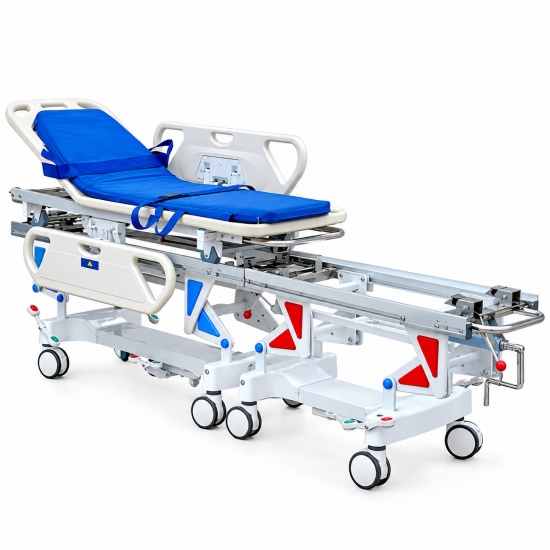
Sliding Patient Transfer Troll...
Sliding Patient Transfer Trolley for Patients Requiring Assisted MovementPatient
Manual Patient Transport Troll...
Height Adjustable Patient Transfer Stretcher for Reduced-Mobility CarePatients w
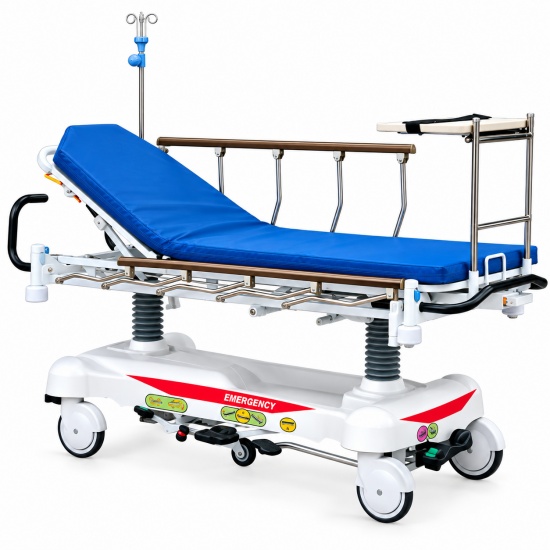
Hydraulic Patient Transfer Str...
Hydraulic Patient Transfer Stretcher for Reduced-Mobility CarePatients with sign