Full-Body Turning Elderly Care Bed with Foldable Aluminum Side Rails
Product Overview
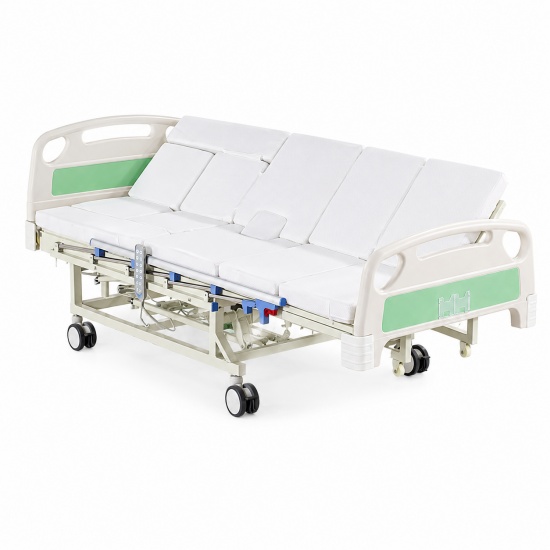
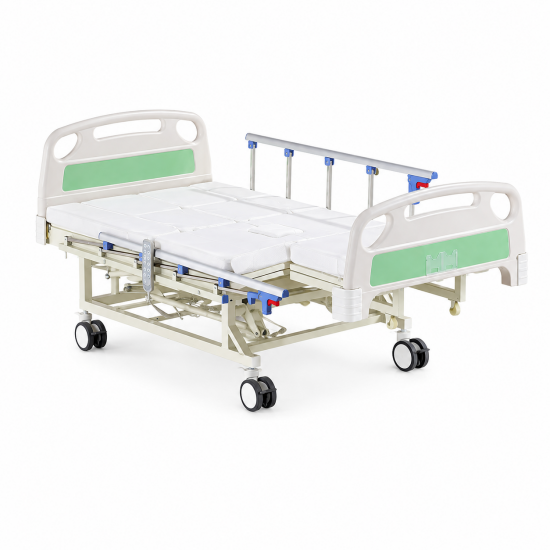
A Care Bed Designed Around the Needs of Long-Term Bedridden Elderly Users
Caring for an elderly person who has difficulty changing position independently involves much more than providing a comfortable place to sleep. Turning, sitting up, adjusting the legs, eating, toileting and personal hygiene can all become repeated parts of the daily care routine.
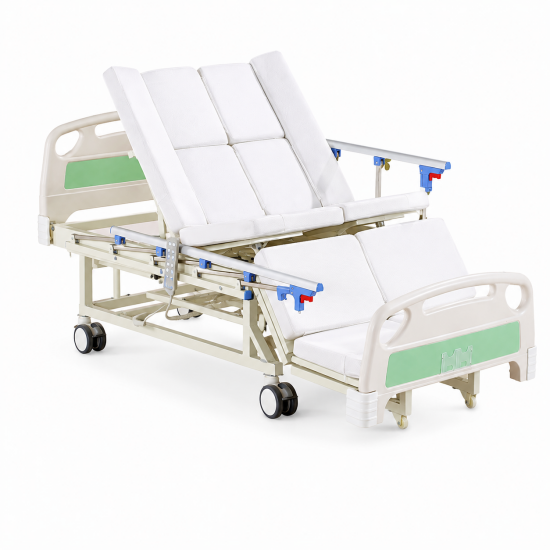
This full-body turning elderly care bed is designed around those practical needs. It combines electric left and right turning with adjustable back and leg sections, while maintaining a standard-width sleeping platform. Foldable aluminum alloy side rails provide bedside protection and can be lowered when caregivers need closer access to the user.
The result is a multifunction care platform intended for elderly users who require regular assistance with repositioning and everyday activities but do not need an extra-wide bed.
Full-Body Left and Right Turning
More Than a Simple Side Tilt
The main feature of this model is its powered lateral turning system. During left or right turning, the supporting bed sections work together to assist repositioning across the body rather than concentrating movement around only one local section.
This is an important distinction for buyers comparing different types of Turning Nursing Bed designs. Although many products may be described as turning beds, the structure and range of the supporting surface can be quite different.
Coordinated Support from Upper Body to Lower Limbs
For this model, the turning structure is designed to support the user's position along the main length of the body. The upper body, waist, hip and lower-limb areas are repositioned in a coordinated way as the bed moves toward either side.
For elderly users with very limited independent mobility, this type of full-body support can make routine repositioning easier to manage than manually rolling the user entirely by caregiver effort.
Suitable for Repeated Daily Repositioning
Some elderly users may spend most of the day and night in bed. In these situations, changing position is not an occasional task. It can form part of the regular care routine.
The electric turning function gives caregivers a practical way to assist left and right repositioning through the handset while remaining available to supervise and support the user during movement.
Electric Backrest Adjustment for Sitting Support
The back section can be raised electrically to move the user from a flat lying position toward a supported upper-body posture.
Useful for Meals and Everyday Interaction
For an elderly person who cannot easily sit up without assistance, an adjustable backrest can make many routine activities more manageable. The caregiver can raise the upper body before meals, drinking, reading, conversation or other bedside activities.
Less Manual Lifting During Routine Care
Instead of repeatedly lifting the user's upper body by hand, the caregiver can use the powered adjustment to establish the required position. This can be especially useful in home care and long-term care environments where the same movements are performed several times each day.
Adjustable Leg Positioning
The leg section can be raised or lowered according to the required care position. It works together with the backrest and turning functions to provide several positioning options within one bed.
Different Positions for Different Parts of the Day
A long-term care bed does not remain in one position throughout the day. The user may lie flat while resting, sit up during meals and communication, change leg position for comfort, and require assisted turning at other times.
By combining these movements, caregivers can adapt the bed to different parts of the daily routine without transferring the user to another piece of equipment.
Standard Width for Elderly Care Environments
Turning Assistance Does Not Always Require an Extra-Wide Bed
This model uses a conventional care-bed width rather than the wider platform used on our dedicated wide-body turning configurations.
It is therefore intended for standard-size users who need advanced turning assistance but do not require additional sleeping width.
A Practical Choice Where Room Space Matters
Bed width also affects the working space available around the bed. In home-care rooms, elderly apartments and nursing facilities, maintaining sufficient clearance for caregivers can be important.
A standard-width design makes it easier to introduce full-body turning functionality without unnecessarily increasing the overall footprint of the care equipment.
Foldable Aluminum Alloy Side Rails
This configuration uses aluminum alloy folding side rails rather than the larger two-piece ABS side panels available on other models in the series.
Protection When Raised, Access When Lowered
When positioned upright, the rails provide a physical barrier along the bedside. When closer access is required, the rail can be folded down so the caregiver can approach the user more easily.
This is particularly useful during clothing changes, personal hygiene, repositioning and other hands-on care procedures.
Why Some Buyers Prefer Aluminum Folding Rails
Side-rail selection should be based on the intended care routine rather than appearance alone. In environments where caregivers frequently work from the side of the bed, a folding rail can provide a useful balance between bedside protection and accessibility.
Integrated Toileting Support
Toileting can become one of the more difficult daily activities for elderly users who cannot safely stand or transfer independently. This bed incorporates a toileting opening into the sleeping platform to support bedside toileting procedures with caregiver assistance.
Designed for Users with Limited Transfer Ability
For highly dependent users, repeated transfers between the bed and toilet may require considerable caregiver assistance. Integrating toileting support into the care bed provides another option when conventional transfers are difficult.
The opening can remain covered as part of the normal sleeping surface when the function is not required.
Supporting Meals and Daily Activities at Bedside
Integrated Overbed Table
An overbed table provides a convenient surface for meals, drinks and frequently used personal items. The backrest can first be raised to establish a more upright posture, allowing the table and positioning functions to work together during daily activities.
More Independence Where Possible
Even when an elderly user requires substantial nursing assistance, maintaining the ability to perform simple activities from bed can still be valuable. A suitable sitting position combined with a reachable table can make eating, reading or using personal items easier.
Hair Washing Without Leaving the Bed
Personal hygiene is another important consideration in long-term bedridden care. This model can be used with a dedicated washing basin so caregivers can assist with hair washing at the bedside.
A Practical Function for Home and Institutional Care
Moving a dependent elderly person into a bathroom purely for hair washing may not always be practical. Bedside washing support allows this part of the hygiene routine to be carried out closer to the user's normal care position.
IV Pole for Additional Care Requirements
An IV pole is also incorporated into the bed configuration, providing a convenient mounting point when infusion support is required as part of the user's care plan.
Together with the positioning and daily living functions, this helps make the bed suitable for a wider range of home-care, rehabilitation and long-term care applications.
Why This Bed Is Different from a Conventional Elderly Nursing Bed
A conventional electric Nursing Bed may already provide useful functions such as backrest adjustment, leg positioning or overall height adjustment. For many mobile or semi-mobile elderly users, those functions may be sufficient.
A turning care bed serves a different group of users.
Conventional Elderly Care Bed
The primary purpose is usually comfortable positioning, easier entry and exit, and support for normal daily living activities.
Turning Elderly Care Bed
The priority shifts toward users who cannot reposition themselves easily. Left and right turning becomes a core function alongside backrest, leg and personal-care assistance.
This is why we position the two ranges separately even though both belong to the broader elderly and nursing care bed category.
Who Should Consider This Model?
This model is particularly suitable where the user's care requirements have progressed beyond basic bed adjustment and regular assisted repositioning has become part of everyday care.
Typical Users and Applications Include:
- Elderly users with significantly reduced mobility
- Long-term bedridden users
- Users who have difficulty turning independently
- People requiring regular caregiver-assisted repositioning
- Home-based elderly care
- Nursing homes and long-term care facilities
- Rehabilitation and recovery environments
- Users requiring bedside toileting and hygiene assistance
What Should Buyers Check When Comparing Turning Care Beds?
Full-Body or Partial Turning?
This should be one of the first questions asked. Different turning mechanisms support different areas of the body. Buyers should confirm how the bed surface moves rather than relying only on the product name.
Standard or Extra-Wide Platform?
Bed width should correspond to the intended user's body size and the available room space. A wider model can be useful for larger users, while a standard-width version is generally more practical when additional space is unnecessary.
ABS or Aluminum Side Rails?
Different rail systems suit different purchasing requirements. Two-piece ABS rails provide a larger molded barrier, while folding aluminum rails provide a more open structure and convenient bedside access.
Which Daily Care Functions Are Actually Needed?
Consider the user's real routine: Does the person require regular turning? Can they sit up independently? Is toileting difficult? Will meals frequently be taken in bed? Is bedside hair washing necessary?
Answering these questions makes it easier to choose an appropriate configuration instead of simply purchasing the model with the largest number of functions.
Built for the Realities of Long-Term Elderly Care
The value of a multifunction elderly care bed lies in how well it supports the tasks that caregivers perform every day. For users with severely limited mobility, turning, sitting, toileting and hygiene can require far more assistance than ordinary bed adjustment.
This full-body turning elderly care bed addresses those needs through powered left and right repositioning, adjustable back and leg sections, integrated daily-care functions and foldable aluminum alloy side rails. Its standard-width platform makes it suitable for users who require advanced care functionality without an oversized bed.
For nursing homes, home-care equipment distributors, rehabilitation providers and elderly care projects, different configurations within our Turning Nursing Bed series can be selected according to user size, turning structure, side-rail preference and required care functions.
For product specifications, wholesale orders, OEM/ODM configurations or project purchasing requirements, please contact us for more information.
Frequently Asked Questions
Yes, we support comprehensive OEM and ODM customization services. We can adjust bed size, load-bearing capacity, number of adjustment functions, bed surface material, guardrail style and overall color according to your demands. For medical institutions, we can also add matching auxiliary accessories
We support door-to-door global shipping covering Europe, North America, Southeast Asia, Middle East and other regions. All medical beds are shipped with modular packaging to reduce transportation damage. We provide free detailed English paper installation manuals and step-by-step installation video
Our full range of medical beds supports multi-scenario use. Electric medical beds and manual hospital beds are specially designed for general wards, intensive care units and emergency rooms of public and private hospitals. Nursing beds with side rails and anti-fall functions are perfect for nursing
Related Products You May Like
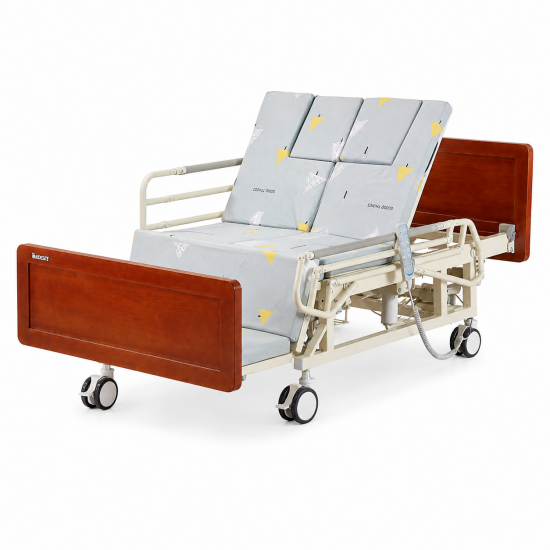
Electric Elderly Turning Care ...
Electric Turning Care Bed Designed for Long-Term Elderly CareFor elderly users w
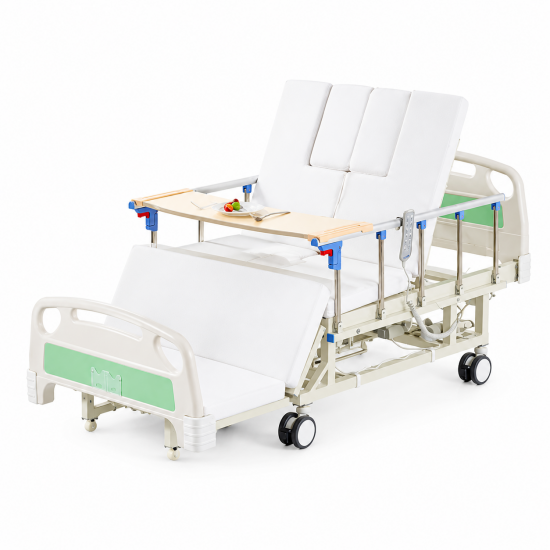
Electric Elderly Care Bed with...
Electric Elderly Care Bed Designed for Assisted RepositioningFor elderly people
Full-Body Turning Elderly Care...
A Care Bed Designed Around the Needs of Long-Term Bedridden Elderly UsersCaring