23cm Low Electric Elderly Care Bed with 5-Function Positioning
Product Overview
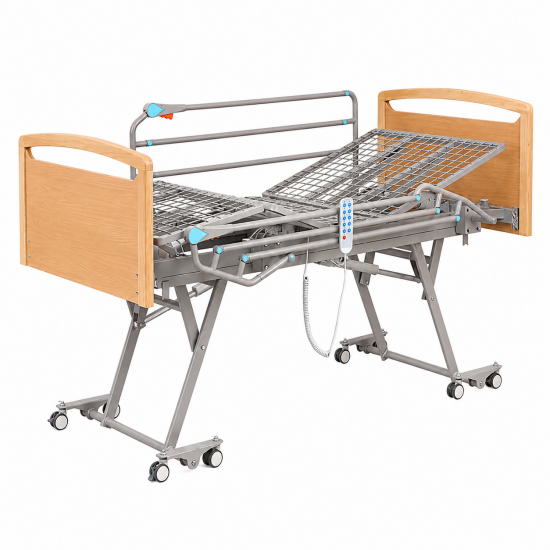
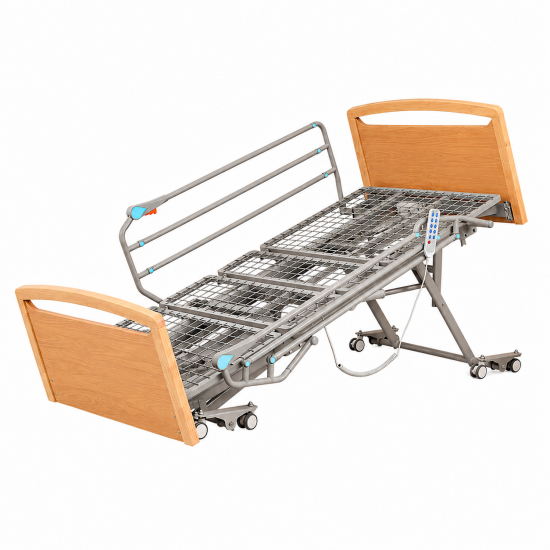
A Low-Level Electric Bed Designed for Everyday Elderly Care
For an elderly resident who spends many hours in bed, bed height affects much more than convenience. The position required during rest may be very different from the height caregivers need when providing personal care, changing bedding or assisting with repositioning.
This electric elderly care bed provides a broad height adjustment range from approximately 230 mm to 700 mm. The bed can be lowered close to floor level when a reduced sleeping height is preferred and raised again when caregivers need a more practical working position.
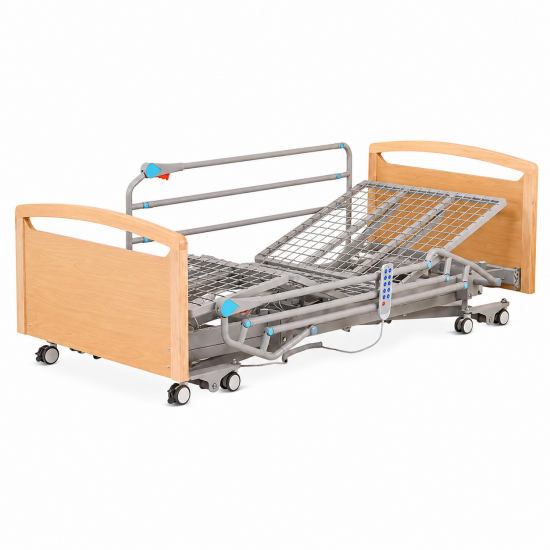
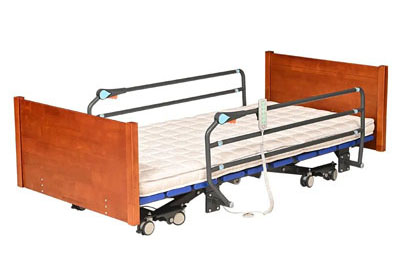
Combined with electric backrest and knee adjustment, Trendelenburg and reverse Trendelenburg positioning, long side rails and warm wooden-finish head and foot panels, the bed is designed for nursing homes, senior care facilities and other long-term residential care environments.
Why a 23cm Low Position Matters in Elderly Care
Reducing the Distance Between the Mattress and Floor
Some elderly residents require closer supervision because of limited mobility, reduced balance or difficulty repositioning independently. In these situations, keeping the mattress platform unnecessarily high may not be desirable during resting periods.
The mattress platform of this model can be lowered to approximately 230 mm from the floor, creating a substantially lower resting position than a conventional fixed-height nursing bed.
A Useful Option for Fall-Risk Management Strategies
A low bed does not replace appropriate resident assessment, supervision or other fall-prevention measures. However, reducing mattress platform height can form part of a facility's broader fall-risk management strategy for selected residents.
For nursing home buyers, this makes minimum bed height an important specification to evaluate alongside side rail design, mobility requirements and caregiver access.
Low at Rest, High When Care Is Needed
A permanently low bed may help with one aspect of resident care but can create another problem when caregivers need to work around the mattress. For this reason, this model is not limited to a low resting height.
When nursing assistance is required, the mattress platform can be electrically raised to approximately 700 mm.
470mm Total Height Adjustment Range
The approximately 230–700 mm adjustment range provides around 470 mm of vertical travel. This allows the same bed to serve two very different purposes during the day: a low-level resting environment for the resident and an elevated working position for the caregiver.
Five Electric Functions for Changing Daily Care Needs
Backrest Elevation for Upright Activities
The powered backrest allows the upper body to be raised without manually repositioning the mattress platform. This can provide a more suitable posture for activities such as eating, reading, conversation and general daytime rest.
From Lying to a More Upright Position
For elderly residents who spend extended periods in bed, being able to change upper-body position throughout the day provides greater flexibility than a fixed mattress platform.
Knee Section Adjustment
The knee section can be raised electrically and used independently or together with the backrest. Different combinations allow caregivers to configure the mattress platform according to the resident's daily positioning requirements.
230–700mm Electric Height Adjustment
The entire mattress platform can be raised or lowered electrically. At approximately 230 mm, the bed provides its low-level configuration. At approximately 700 mm, the elevated position provides easier access for bedside care.
One Bed for Resting and Nursing Activities
Instead of selecting a fixed low bed that remains close to floor level, facilities can use the electric height function to adapt the bed to different stages of the resident's daily routine.
Trendelenburg Positioning
The complete mattress platform can be tilted electrically into a Trendelenburg position, providing an additional whole-bed adjustment beyond the standard backrest and knee functions.
Reverse Trendelenburg Positioning
Reverse Trendelenburg tilts the mattress platform in the opposite direction, further expanding the range of positions available to caregivers.
A More Residential Appearance for Long-Term Living
Wooden-Finish Head and Foot Panels
An elderly care bed is often part of a resident's room for months or years. In this environment, appearance can influence whether the room feels institutional or residential.
This model uses large wooden-finish head and foot panels to soften the clinical appearance normally associated with medical beds. The warm wood-style surfaces are better suited to interiors where facilities want care equipment to blend with wardrobes, bedside cabinets and other residential furniture.
Designed for Senior Living Environments
The residential appearance makes the bed particularly suitable for nursing homes, assisted living facilities, elderly care centers and long-term care rooms where both functionality and interior atmosphere are considered during equipment selection.
Long Side Rails for Bedside Protection
Long side rails provide additional bedside protection when raised. Their extended design covers a substantial portion of the mattress platform while still allowing the rails to be lowered when caregivers require direct access to the resident.
Flexible Access During Daily Care
Caregivers can change the rail position according to the activity being performed, whether assisting with repositioning, changing bedding or providing routine bedside care.
Safety Features Should Match the Resident
Side rails should always be used according to the resident's individual condition and the care facility's procedures. For institutional procurement, rail design should therefore be considered together with bed height, resident mobility and supervision requirements.
Why Elderly Care Facilities Need a Wider Height Range
When purchasing elderly care beds, minimum height often receives the most attention. For practical long-term use, however, maximum height is equally important.
230mm for the Resident
The low position is intended for periods when keeping the mattress platform closer to floor level is preferred.
700mm for the Caregiver
The elevated position gives caregivers easier access to the mattress platform during routine nursing activities.
The Important Number Is the Entire Range
For this reason, procurement teams should not compare low beds only by asking, “How low can it go?” A more useful question is, “What is the complete height adjustment range?”
A bed capable of moving from approximately 230 mm to 700 mm provides substantially more positioning flexibility than a model that reaches a similar low position but has limited upward travel.
Designed for Long-Term Elderly Care Applications
Nursing Homes
This model is well suited to nursing home rooms where residents may require different bed heights during resting, personal care and daily activities.
Assisted Living Facilities
The combination of electric adjustment and residential wooden styling can be useful for facilities seeking care functionality without creating an overly clinical bedroom environment.
Long-Term Care Centers
Five powered functions allow staff to adapt the bed position as resident care requirements change over time.
Rehabilitation and Senior Care Facilities
The adjustable mattress platform can support facilities caring for elderly residents with varying mobility and positioning requirements.
Key Product Configuration
Bed Type
Electric five-function low-level elderly care bed.
Minimum Mattress Platform Height
Approximately 230 mm from floor level.
Maximum Mattress Platform Height
Approximately 700 mm from floor level.
Total Height Adjustment
Approximately 470 mm of vertical travel.
Backrest Function
Electric backrest elevation for upper-body positioning.
Knee Rest Function
Electric knee section elevation.
Height Function
Powered whole-bed height adjustment between approximately 230 and 700 mm.
Whole-Bed Tilt
Electric Trendelenburg and reverse Trendelenburg positioning.
Control System
Handheld electric controller for daily bed adjustment.
Side Protection
Long foldable bedside rails.
Head and Foot Design
Wooden-finish panels designed to create a warmer residential appearance.
Recommended Environments
Nursing homes, elderly care facilities, assisted living communities, rehabilitation centers and long-term residential care institutions.
Choosing a Low Bed for Elderly Residents
A useful elderly care bed should not be judged only by the number of electric functions it provides. Buyers should also consider how those functions fit into the resident's actual daily routine.
This model combines a 230 mm low position with a 700 mm caregiver working height, allowing the mattress platform to change as care requirements change. The five electric adjustments provide further positioning flexibility, while the wooden-finish panels help the bed fit naturally into a long-term residential environment.
For nursing homes and senior care buyers comparing different types of Nursing Bed solutions, this model offers a balance between low-level positioning, caregiver accessibility and residential design.
For available configurations, dimensions, electrical specifications, mattress options or OEM requirements, please contact us for detailed product information.
Frequently Asked Questions
Yes, we support comprehensive OEM and ODM customization services. We can adjust bed size, load-bearing capacity, number of adjustment functions, bed surface material, guardrail style and overall color according to your demands. For medical institutions, we can also add matching auxiliary accessories
We support door-to-door global shipping covering Europe, North America, Southeast Asia, Middle East and other regions. All medical beds are shipped with modular packaging to reduce transportation damage. We provide free detailed English paper installation manuals and step-by-step installation video
Our full range of medical beds supports multi-scenario use. Electric medical beds and manual hospital beds are specially designed for general wards, intensive care units and emergency rooms of public and private hospitals. Nursing beds with side rails and anti-fall functions are perfect for nursing
Related Products You May Like
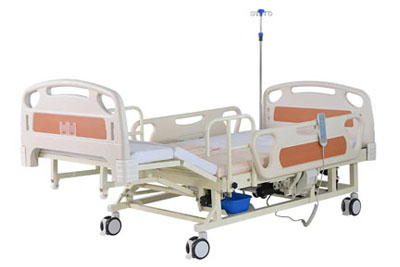
Electric Multi-Functional Bed ...
Electric Nursing Bed with Toilet for Comfortable Elderly CareThis multifunction
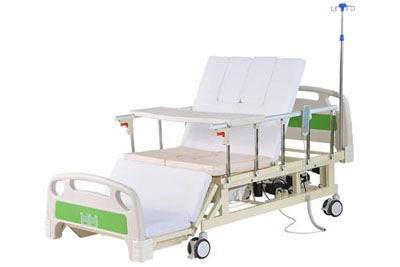
Electric Nursing Home Care Bed...
Electric Home Nursing Bed for Comfortable Elderly CareThis practical home nursin
Ultra-Low Elderly Care Bed wit...
Ultra-Low Electric Nursing Bed for Safer Senior LivingThis advanced low floor el